

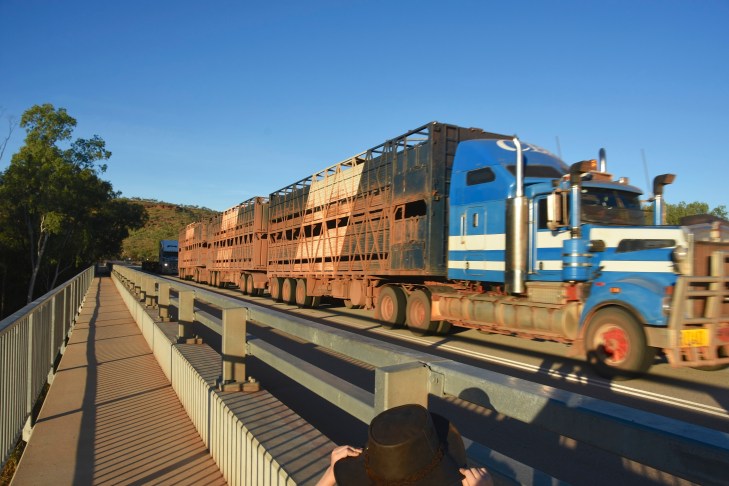
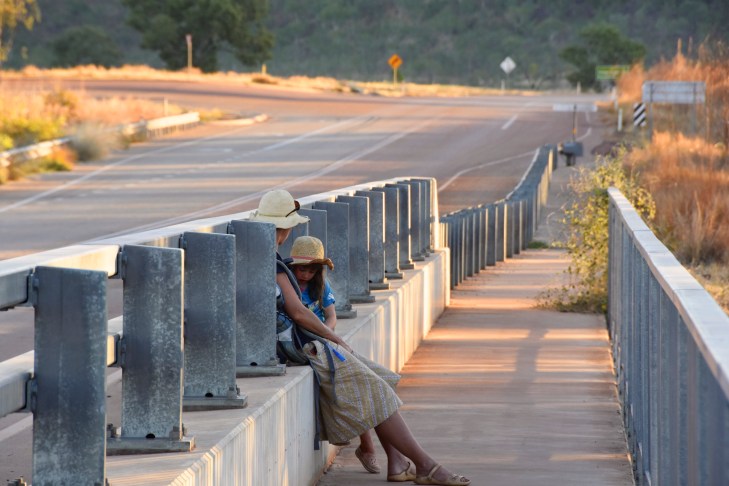
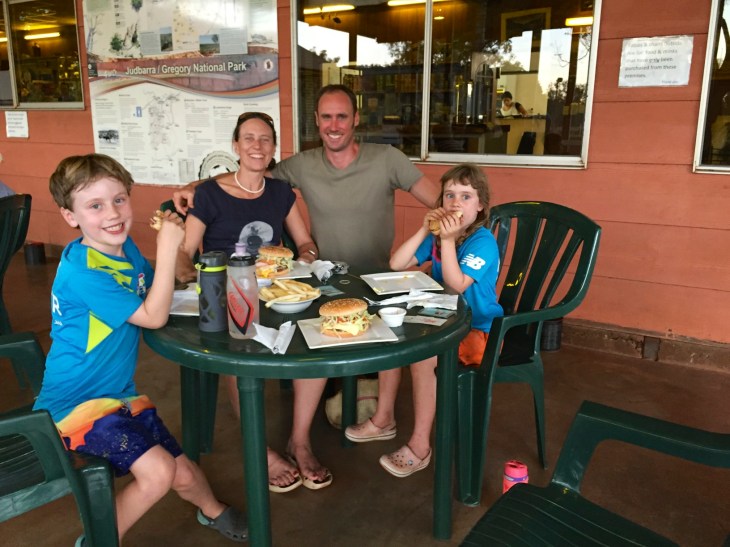
On the way to Keep River, we stayed a night along side the Victoria River at the aptly named Victoria River Roadhouse. It was a nice enough place, on a cattle station, but there was not much to do as it was really just an overnight stop on the way through to Kununurra. After set up we went for a quick explore and walked down to the bridge we had crossed over just before arriving. It was long and about 50m above the river below, the perfect place to launch various rocks and sticks from so we could watch them plummet to the water below us. It was also a major route for road trains so we watched a few of them thunder past us, with the bridge shaking each time one went across. That night, we treated ourselves to burgers at the roadhouse, giving Kat a well earned night off from the kitchen.
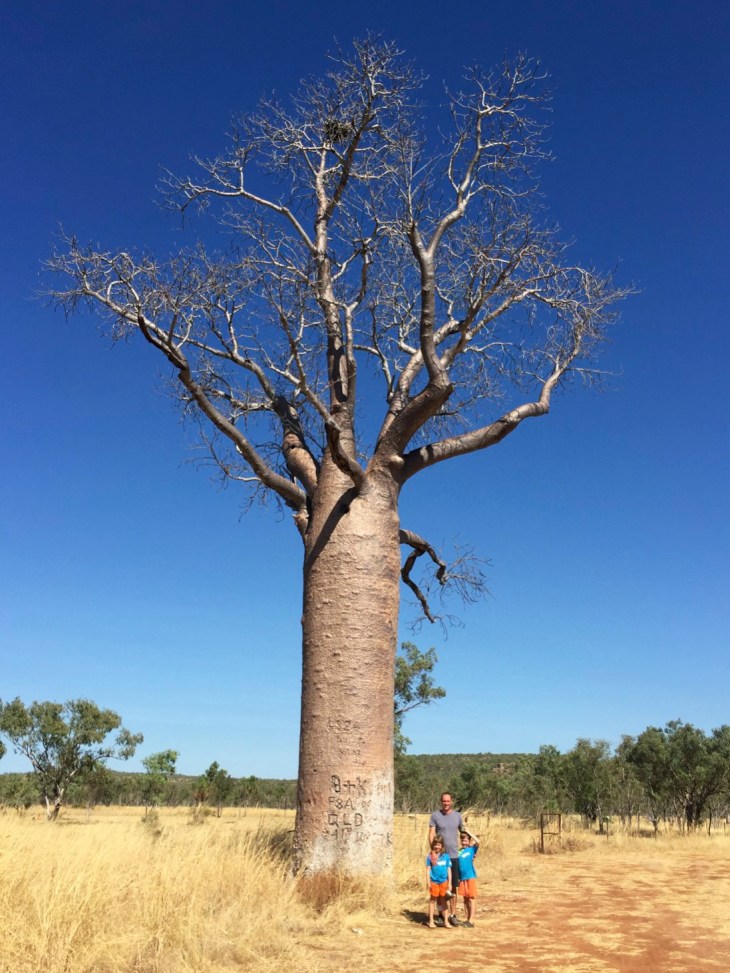
We headed off the next morning and were planning to drive to the only zebra rock mine in the region to stay the night. Zebra rock is a beautiful striped rock with really clear layers of dark and light rock, which is mined and then sculptured into beautiful pieces, and this campground had a mine nearby as well as a display of the rocks which we were keen to see. We arrived at the mine around lunch time and enjoyed a couple of scones and tea at the cafe while the lucky kids got to chose their very own piece of zebra rock and get to work sanding them down to a smooth finish. Although the place looked quite nice, it was not cheap and we were keen to visit the Keep River National Park which was just down the road and had a campground with a much lower nightly rate. We decided to just spend an hour or so letting the kids work on their rocks before heading to the national park to see if there were any sites left. As we turned off the main road in to the park and drove up the dirt road towards the campground we kept our fingers crossed that there would still be a site free as otherwise we would need to drive back to the zebra rock mine and camp there instead. The drive up was really scenic, with massive boab trees all long the road. The boab tree is unusual in shape, but really spectacular. It has a massive swollen trunk, looking like someone has taken a hose, shoved it into the trunk and turned it on max for a while. The branches then extend out in a circular shape which creates a gorgeous silhouette at dusk and dawn. Many of the trunks we saw had split into two or three vertical sections which were then all squashed together to create a single trunk. We pulled into the loop road at the campsite and it looked pretty full with all the sites we passed containing cars, vans or tents. We passed one small looking site that we weren’t sure would fit our trailer so kept going. As we got to the end of the loop we realised that the empty site we had passed was on the only one free so we headed back to it to see if we could squeeze in. After some deft manoeuvring of the trailer, parking one side right up against the side bollards, we flipped the tent out and managed to squeeze onto the site nicely. The place was really lovely, with a massive rock in the middle that the kids spent hours playing on that afternoon. Out the back of the campground was a massive rocky escarpment, made up of the same layered sandstone formations that are famous in the nearby Bungle Bungle ranges.
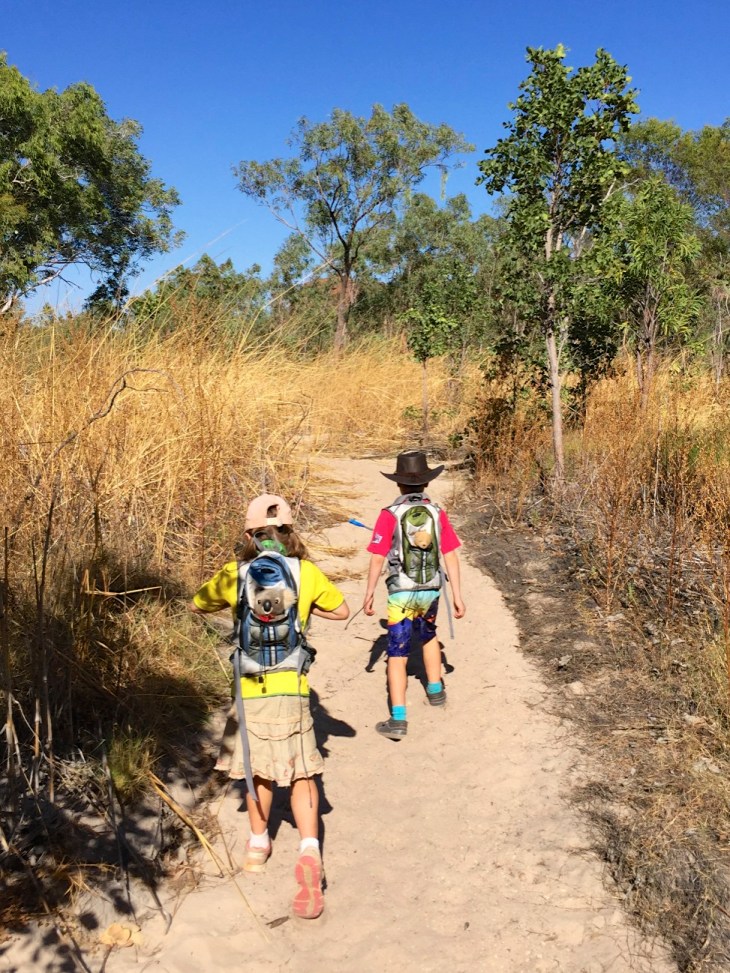
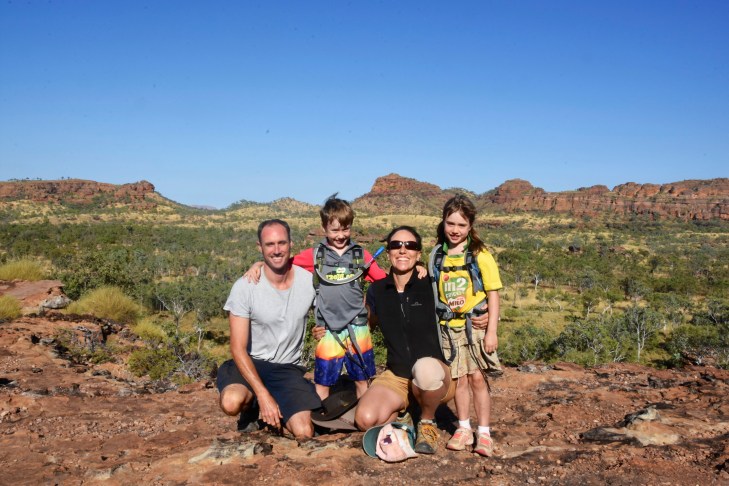
We had seen a sign at camp saying there was a guided ranger walk the next morning heading from the campground so we got the kids backpacks stocked with water and snacks and headed to the start of the trail. The ranger was awesome. He was super passionate about the place, and knew heaps about the aboriginal culture and language, having now been based in three different regions in the NT. He talked about the geology, ecology, customs and culture, as well as bush medicine and plants for a good 30 minutes before we even set off on the walk. Learning about land management practices was really interesting. We had driven past lots of seemingly random patches of burnt ground by the side of the road over the last couple of months and always thought there was no logic to it. We found out that there was in fact a lot of planning involved, both by the traditional owners and by the national parks rangers. It was all to do with controlling when new plants would germinate, eradicating certain less desirable species, as well as ensuring there were enough safe and fertile areas to support the animals that live in the area. Also learning about the aboriginal language was fascinating. The ranger would often ask the local aborigines what the word for something was, such as a fish he saw. Often they would say ‘we just call that a fish’. If there was no known use for something, then it didn’t have a name. Only things they could use, eat, or needed to avoid would get names, which is quite different to our world where we feel the need to name and catalogue everything we possibly can. They also operate on a need to know basis, with knowledge about the world only being passed on to the next generation in stages. If the younger generations don’t show an interest in learning about the basics, they have not earned the right to learn about the next level of knowledge. Progressing through this knowledge is what ultimately results in you becoming an elder, but it is something that is earned, not just something that is given. Again, this is very different to our culture where knowledge is almost pushed onto the younger generation. Neither is necessarily the better way, but it is very interesting to note the differences between the cultures. The walk itself was beautiful. It took us right through the middle of the rocky outcrops behind the campground, and the ranger continued sharing his wealth of knowledge throughout the walk. Being right on the edge of two completely different geologies could not have been more clear. On our right was the Victoria River geology, which featured long, flat rock escarpments, whereas on the left was the more layered and rough formations typical of the Bungle Bungle ranges, making them look like beehives.
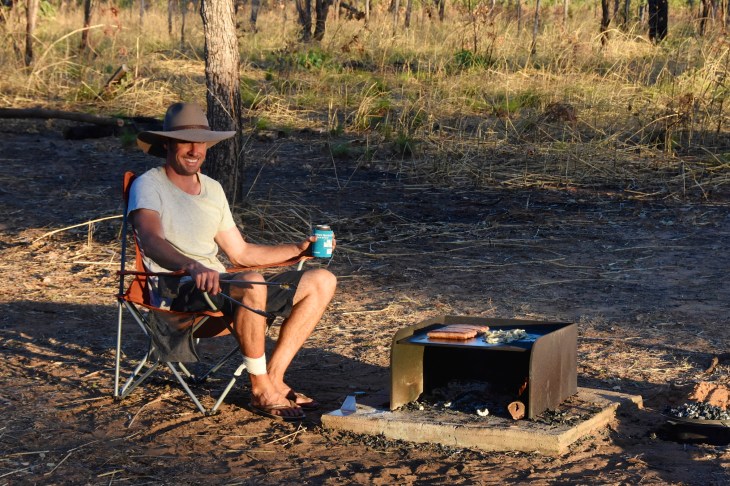
After the usual lunch of sandwiches for the boys and wraps for the girls, the kids headed back to the big rock for some more play while we enjoyed a bit of peace and quiet at camp. With an afternoon of no plans and an available fire pit, Kat decided to do some baking. First up was a lemon cake which was very successful, followed by some Nanny (aka Muesli) slice. Unfortunately the camp oven was way too hot by this stage so the slice resembled oat-like charcoal by the time its normal cooking time had passed. In spite of my usual eat anything approach, even I suggested maybe we should just throw that batch out after sampling it. Kat tweaked the temperature and whipped up a much more successful second batch. The fire cooking continued for dinner as we cooked up some sausages which we all agreed tasted better when cooked on the open fire.
As we only had about 70km to drive until we got to Kununurra, our next stop, we were in no rush the next morning. The ranger had also told us yesterday that the drive up to the next campground was really picturesque so once we had packed up we drove the 20km up there to enjoy it before heading back the way we came and out to the main road towards Kununurra. My leg had been getting progressively worse over the last few days, with the whole area becoming red and very sore. We decided that once we got to Kununurra and set up that we would head straight to emergency to get it checked out.







 Wide open spaces